Saltcorner
By Bob Goemans
By Bob Goemans

Likely Reef Tank Suitable
Likely Fish-Only Tank Suitable
These fishes belong in the Order Syngnathiformes and Suborder Syngnathoidei as members of the Family Syngnathidae (Seahorses & Pipefishes) consisting of 2 Subfamilies, 52 genera, and 200+ species.
Its difficult to properly identify many of them as their physical appearance can vary from location to location. Rudie Kuiter's Seahorses, Pipefishes and Their Relatives is an excellent publication for identification purposes.
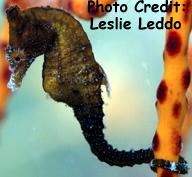
There are about 24 species of seahorses (Indo-Australia coasts - 10 species; European and African Atlantic coasts - 3 species; America Atlantic coast - 6 species; and American Pacific coast - 2 species). All are marine species.
Seahorses wear their bones on their outside as an exoskeleton armor. They range in size from an inch to more than a foot and can change color to match their surroundings. When kept by themselves or with Pipefish/Mandarins, these 'tube-mouthed' fishes add interest and beauty to an invertebrate aquarium. Their diet of newly hatched brine shrimp, rotifers and/or baby mollies, make them somewhat difficult to maintain except for the devoted aquarist. They are slow swimmers, generally have a short two-year life span, mate for life, and the male carries and gives birth to the young.
They require the proper habitat such as an invertebrate aquarium with much live rock, slow moving water, no anemones, at least three daily feedings, and the proper tankmates. In fact, the fry can take in over 3000 food items per day, and a full-grown specimen can eat over 60 shrimp per day! One of the best foodstuffs is the frozen freshwater mysis shrimp, Mysis relicta, which contains an abundant source of HUFA's (Highly Unsaturated Fatty Acids). Live adult brine shrimp fortified with products such as Selcon or Spectra Vital is also an excellent foodstuff.
Generally found in shallow coastal seagrass beds and weedy, rocky bottom areas. If possible purchase tank-raised seahorses as they may be easier to feed. (Contact Ocean Rider (OR) in Hawaii) Since they are slow swimmers be careful where you place heaters. And since air can get trapped in their bodies the use of airstones should be limited or at least carefully applied.
Most sold in the trade are H. erectus, H. kuda, and H. hystrix. Oceanrider sells hybrids of different species that are already use to closed systems and frozen foods such as mysis shrimp.
Leafy Seahorses/Seadragons should be left in nature. Checkout Reef Fishes Volume 1 by Scott Michael (ISBN #1-890087-21-1). You can see a review of this exquisite book by visiting my Product & Book Reviews page.

